
Recover Over A Dry Roof
A cover board and new EPDM or TPO sheet over a single dry layer, with drains extended to the new height.
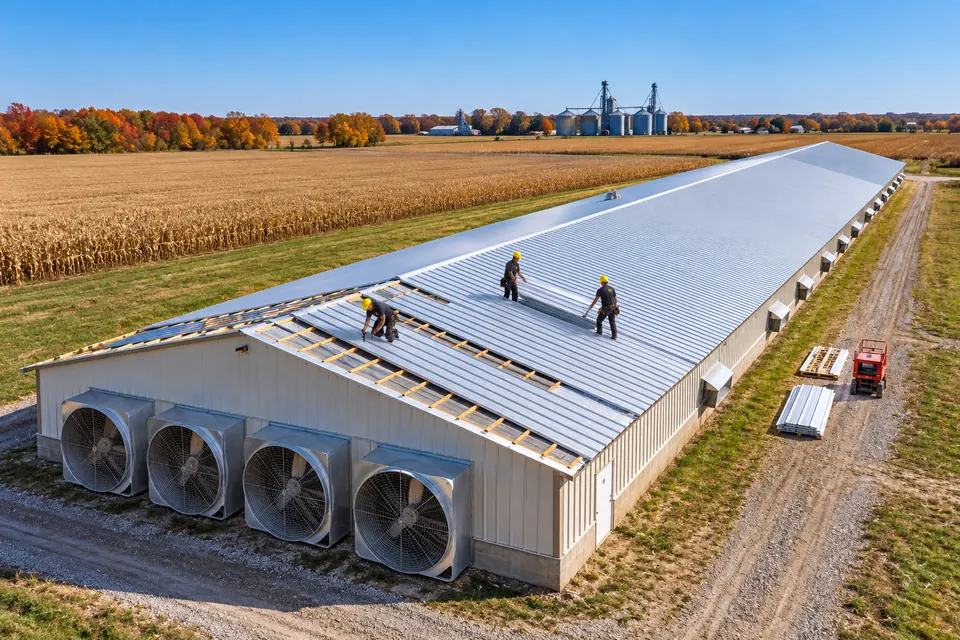
As a Livermore commercial roofing contractor, we sort out recover versus tear-off, new purlins, and insulation levels for McLean County businesses.
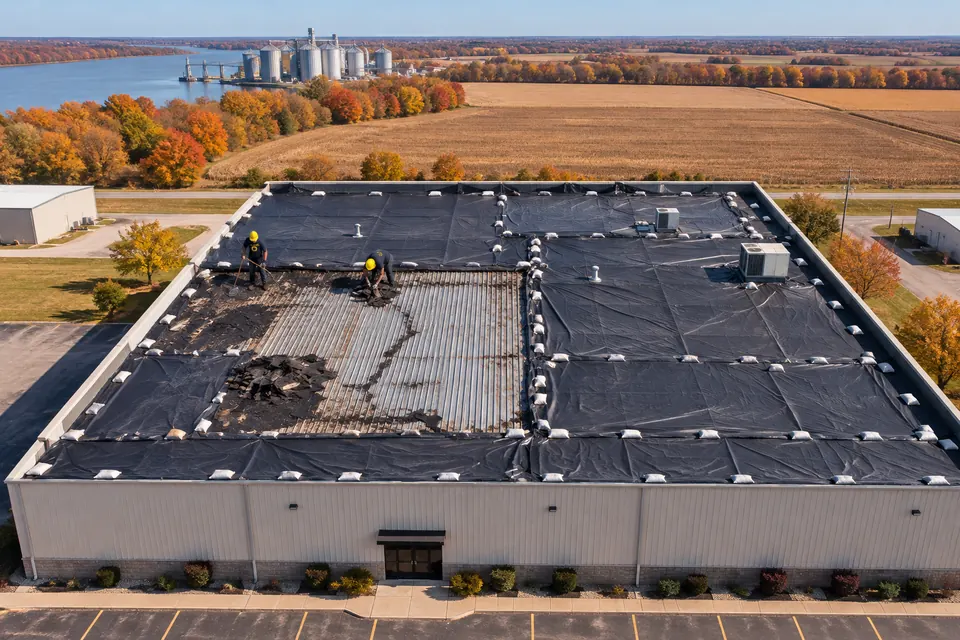
A Livermore commercial roofing contractor brings a short list of questions to the McLean County local building inspector before pricing a roof. City rules come from Livermore City Hall, and the answers decide whether the old roof stays or goes.
McLean County power comes from Kenergy, so questions about added insulation or a white membrane go to Kenergy member services. Asking both offices before the estimate keeps the scope from shifting once work starts.
These conditions decide whether a recover is even on the table.
An earlier recover went over the original roof, and the code limits how many layers a deck can carry.
We confirm the layer count with core cuts and price a tear-off where another recover is ruled out.
Slow leaks at curbs and seams soaked insulation that the surface does not show.
Core cuts or a moisture survey map wet areas so they can be cut out before any recover.
Rust and added loads bent purlins until panels hold water at the low points.
Framing repairs come first, then new panels across the slope, with plan review where the inspector asks.
Thin insulation from an older assembly lets heat escape through the roof in winter.
Insulation is brought to the levels the inspector confirms for the replacement.
Getting answers before ordering keeps the scope and the price stable.
Discovering an extra layer after work starts forces a tear-off nobody budgeted for.
Core cuts and an inspector call up front settle the path before the estimate.
Recovering over wet insulation traps the water against the deck and the new membrane.
Wet sections are mapped and cut out, so the recover starts on dry boards.
Framing changes without plan review stall the job while panels sit on the ground.
Purlin and deck questions go to the inspector before materials are ordered.
Insulation or a white membrane bought without asking the utility leaves a possible program unused.
A written answer from Kenergy, gathered early, shows whether any program applies.
The inspector’s answers and the core cuts point to one of these.
A cover board and new EPDM or TPO sheet over a single dry layer, with drains extended to the new height.
Roofs at the layer limit or with widespread wet boards come off completely, as described on the flat roofing page.
Metal shops with bent framing get purlin repairs and a new metal roof across the affected slope.
Most owners do not know the layer count, and that is fine. A core cut on the first visit answers it in minutes.
Questions get answered in this order before a single board is ordered.
Core cuts count the layers and show wet boards, and purlins on metal buildings are checked from inside.
Recover limits, plan review for purlins or deck, insulation levels, and drain changes go to the McLean County local building inspector.
Questions about added insulation or a white membrane go to Kenergy member services, with answers kept in writing.
Dry single-layer roofs take a recover; roofs at the limit or with wide wet areas are torn off to the deck.
Insulation, cover board, and membrane or framing and panels go on, with every section tied in before the crew leaves.
We work on commercial roofs in Livermore and in each town below. For a building outside this list, just call us or send us a message.
With the McLean County local building inspector, listed on the county’s sheet with the Kentucky Department of Housing, Buildings and Construction. City rules come from Livermore City Hall.
Ask about recovers over existing layers, plan review for new purlins or deck, insulation levels, and drain or gutter changes.
The building code sets recover limits and bars recovers over wet or damaged roofs. The inspector confirms the exact rule for your job, and core cuts show how many layers are already there.
Ask the McLean County inspector before ordering. Framing changes are the kind of work that draws review, and having the answer early keeps panels from sitting on the ground while paperwork catches up.
Kenergy member services can say whether a current commercial program counts added insulation or a reflective membrane, and which records they need. Get the answer in writing before relying on it.
Often, when the old roof is dry and within the layer limit, because removal and haul-off drop out. Wet areas still have to be cut out, and drains and edges are raised, so the gap narrows on wetter roofs.
On a pitched metal shop, a recover means new panels or a retrofit framing system over the old panels once purlins are checked. Rusted or bent purlins are repaired first, and the inspector confirms whether the change needs plan review.
A roof plan showing drains and rooftop units, notes on tear-off or recover and the layer count, the insulation type and thickness, product data for the membrane or panels, and any planned deck or framing repairs.
Tell us the roof type and how long it has leaked. We will count the layers, check the framing, and send a free estimate.
Want a call back about your roof?
Leave a name and number and we will call you, or call (270) 249-4493 now.