Slope And Drainage
Nearly flat decks need tapered insulation or extra outlets; pitched metal buildings need panels rated for their slope. Water leaving the roof comes first.
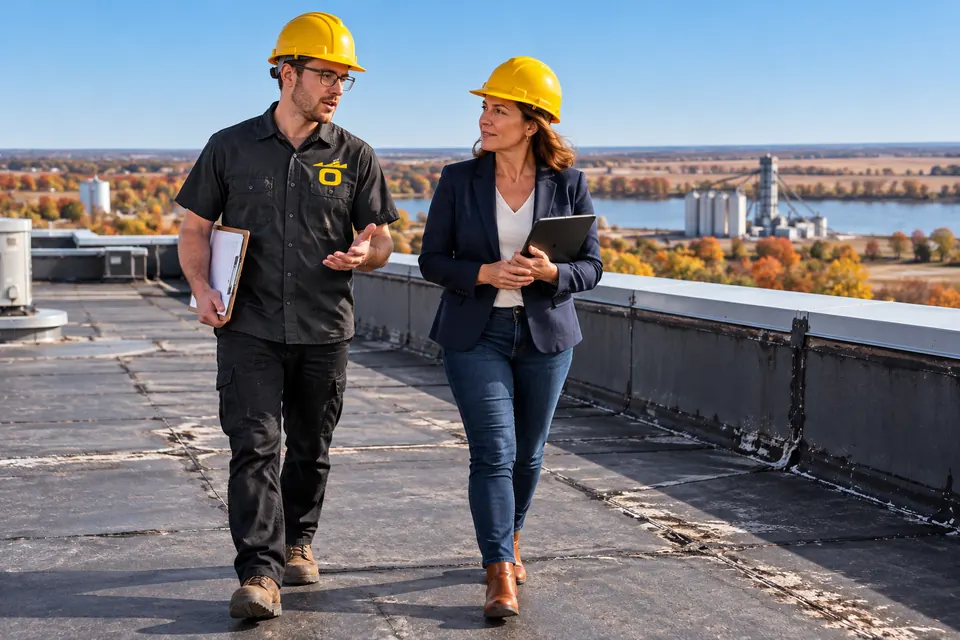
Owensboro Commercial Roofing is a commercial roofing company in Owensboro that repairs and replaces roofs on commercial, industrial, and agricultural buildings.
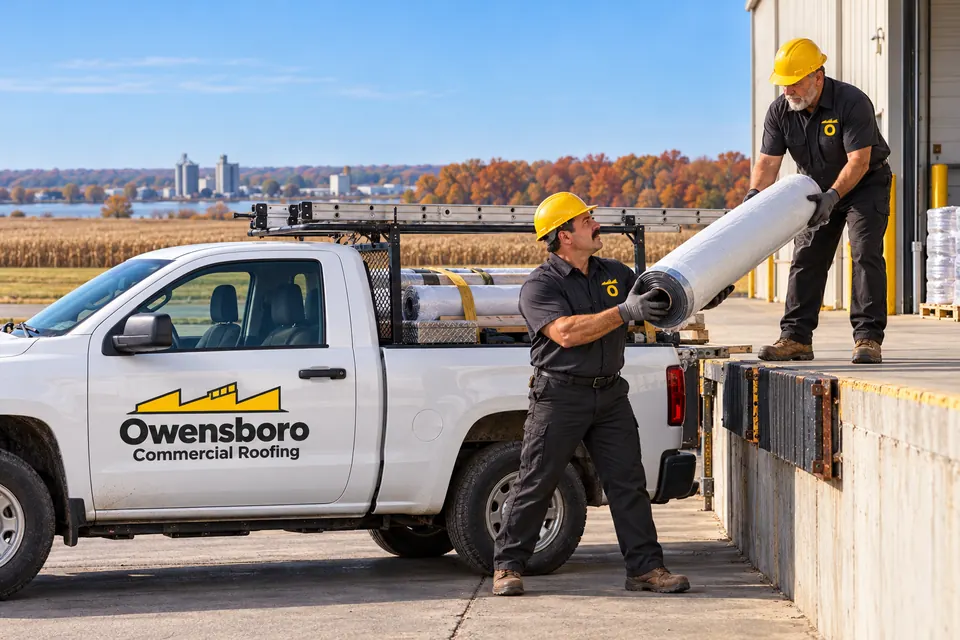
As a commercial roofing company in Owensboro, we start every job on the roof itself. The membrane, the insulation under it, and the deck under that each get checked before anyone talks about a system or a price.
Findings go into a roof plan that sorts the work by urgency, so you can see which sections need attention now and which can wait for a later budget.
Four facts about the building decide most of the plan before a product name comes up.
Nearly flat decks need tapered insulation or extra outlets; pitched metal buildings need panels rated for their slope. Water leaving the roof comes first.
Steel, wood, and concrete decks take different fasteners and adhesives, and the count of existing roof layers decides if a recover is even allowed.
Kitchen exhaust grease, oil mist from machining, and heat near stacks rule out some membranes and call for walkway pads or raised supports.
Occupied offices, running production lines, and loading docks set the work zones, the unit shutdowns, and the order sections come off.
Patches that keep reopening at the same drain or seam usually mean the problem sits under the membrane. A roof walk with core cuts finds it.
Every first walk-through covers the same items, so nothing that changes the scope gets missed.
A plain list of where our work starts and stops on a commercial roof.
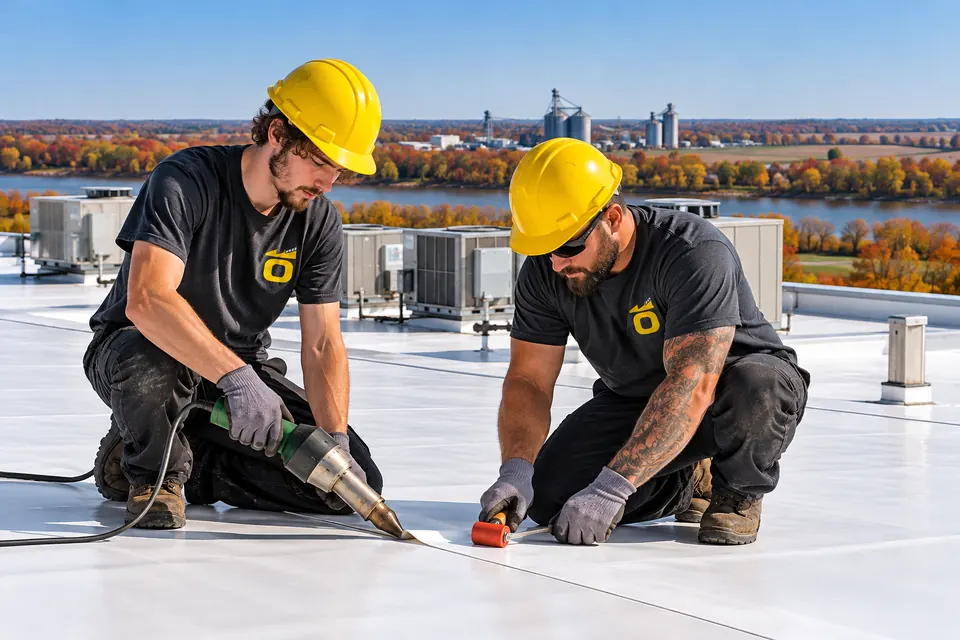
The roof gets measured and every condition that changes the scope gets recorded, starting with moisture in the existing assembly. Crews walk the field, the edges, and every penetration.
Wet boards are found with core cuts or a moisture survey, layers are counted, and drains, curbs, and gas lines are noted. That record later decides recover versus tear-off.
It sets the calendar. Adhesives, sealants, and welded seams need dry surfaces and temperatures within each product’s range. Summer brings hot membranes and afternoon storms, winter needs cold-weather adhesives, spring brings wind at the edges, and fall leaves clog drains. Crews check hourly rain chances from the NWS Paducah office before opening a section.
IRS Publication 946 lists roofs on existing nonresidential buildings as qualified real property when the roof work goes into service after the building did. Whether your job is expensed or depreciated is a decision for your CPA, so keep the scope, invoices, and dated photos of the old membrane and deck damage together.
Check the electric bill. Owensboro buildings get power from Owensboro Municipal Utilities, the city-owned utility, or from Kenergy, a Big Rivers member cooperative serving Daviess County. Ask whether a current program counts added insulation or a reflective membrane, and get the answer in writing before counting on it.
Commercial, industrial, and agricultural buildings only: warehouses, plants, shops, offices, retail strips, churches, schools, and farm buildings. Roofs range from welded TPO and taped EPDM on flat decks to standing seam and R-panel metal on pitched shops.
Work zones are planned around the building and the people in it. Entrances stay clear of chutes and dumpsters, noisy tear-off over offices can be scheduled for early hours you choose, and rooftop units over occupied rooms are shut down only on agreed days.
As a written roof plan with dated photos of seams, drains, curbs, and edge metal, core-cut results, and the work sorted by urgency. Sections that need attention now are separated from those that can wait for a later budget.
Ask for a roof walk. You will get the findings, the photos, and a free estimate built from what is actually on your roof.
Want a call back about your roof?
Leave a name and number and we will call you, or call (270) 249-4493 now.